Introduction
When people search for Europe work permit, they usually want one simple answer:
How can I legally work in Europe?
The problem is that most explanations online are either too technical or misleading. Some make it sound easy. Others make it sound impossible. Both are wrong.
This guide explains the Europe work permit in very simple language, without fear, hype, or shortcuts. By the end, you’ll understand what it is, how it works, and what actually matters.
What Is a Europe Work Permit?
A Europe work permit is official permission given by a specific European country that allows a non-EU citizen to live and work there legally for a particular job and employer.
Europe is a group of many countries, and each country has its own rules. Germany has its own system. Poland has another. Lithuania, Latvia, Romania, all different.
This also means something very important, you cannot work in Europe using a tourist visa or a Schengen travel visa. Those are only for visiting.
Can an Indian Get a Work Permit in Europe?
Yes, Indians can legally get a work permit in Europe if they have a valid job offer, meet the job requirements, and submit correct documents.
But Europe does not give permits just because someone wants to move. A permit is issued only when three things come together:
1. A European employer needs workers
2. You fit the job requirements
3. Your documents are correct and verifiable
In simple words, jobs come first, visas come second.
How Does a Europe Work Permit Actually Work?
To get a work permit in Europe, you must first secure a job offer from a European employer. The employer applies for approval, after which you submit a visa application and supporting documents at the embassy.
The process sounds complicated, but it follows a clear order. Let’s break it into simple steps.
Step 1: A Job Comes First (Always)
First, a real job offer is needed from a registered employer in Europe. This job offer decides everything: the country, the permit type, the salary rules, and the timeline.
No job = no work permit (in most cases).
Step 2: Employer Applies for Permission
Next, in many European countries, the employer applies for approval from their local authorities. They tell the government:
1. “We need this worker”
2. “This job could not be filled locally”
3. “We will pay this salary”
If the government agrees, they allow the employer to hire you.
Step 3: You Apply for the Visa
Once this approval is granted, you apply for the visa at the embassy or visa centre in India. This is when your legal documents & formalities matter the most:
1. You apply at the embassy or visa centre
2. You submit documents
3. You give biometrics (fingerprints + photo)
This is when the work permit becomes a visa in your passport.
Step 4: You Travel and Register
After approval, you travel to Europe and complete the following formalities:
1. You register your address
2. You collect your residence card
Once you receive your resident card, only then do you start working.
No shortcuts. No hidden steps.

Which European Countries Issue More Work Permits?
Some European countries issue more work permits because they have worker shortages. Germany, Poland, Lithuania, Latvia, Romania, and Bulgaria are common examples.
But keep in mind, each country has:
1. Different salary rules
2. Different processing times
3. Different job demand
That said, there is no single easiest country for everyone. What works for a truck driver may not work for a technician or warehouse worker. Everything depends on the job, salary, and your background.
(We’ll cover country-wise details in separate articles.)
What Types of Europe Work Permits Exist?
Even though countries use different names, most permits fall into a few clear categories.
1. Employer-Sponsored Work Permit: The most common is the employer-sponsored work permit, where a company hires you directly.
2. Skilled Worker Permit / Shortage Occupation: Some countries also have skilled worker or shortage occupation permits for jobs they cannot fill locally. This is increasing become more available.
3. EU Blue Card: Highly skilled roles may qualify for the EU Blue Card, which has higher salary requirements.
4. Seasonal Work Permit: There are also seasonal permits for temporary jobs (farming, hospitality).
Each country names these differently, but the idea is the same.
What Documents Are Needed?
European visa systems work on proof, not promises. You usually need:
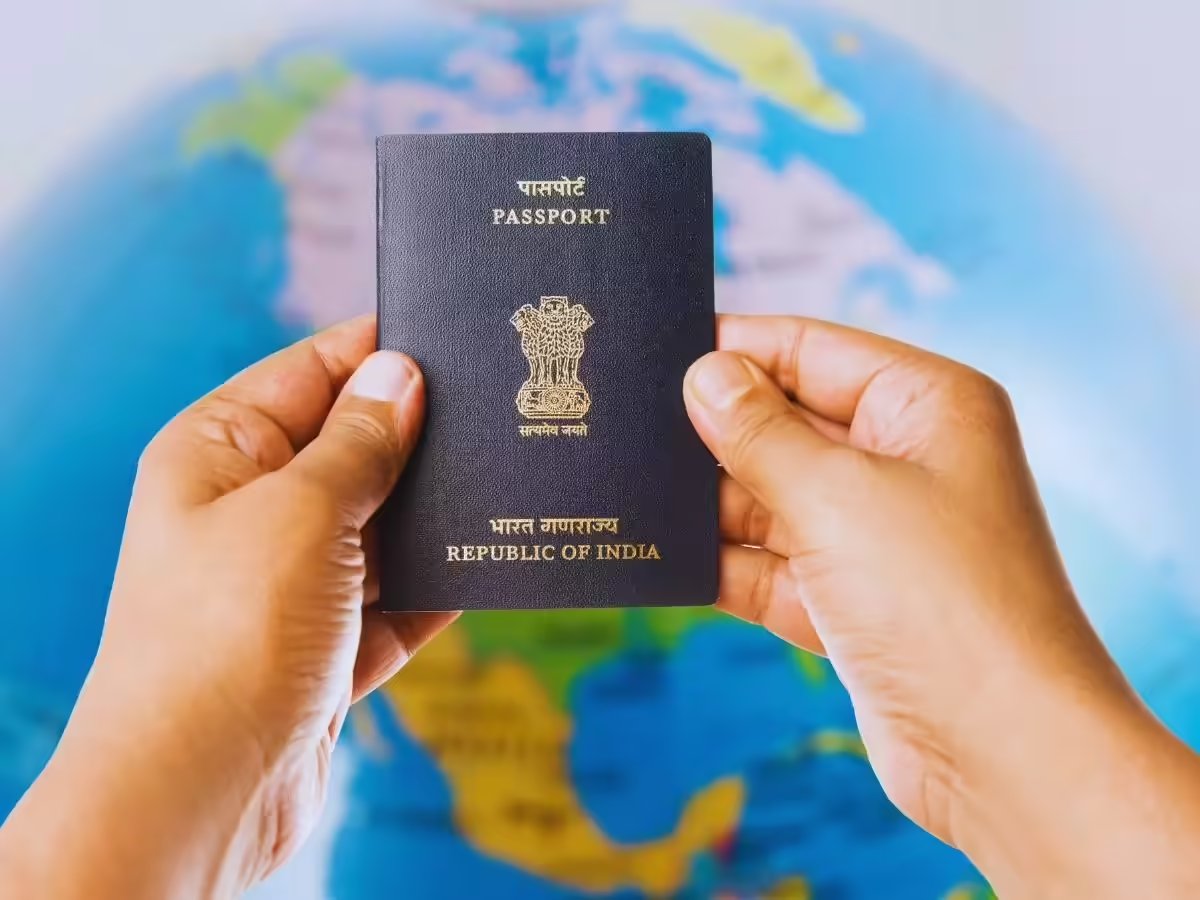
1. Passport
2. Job offer or contract
3. Education or skill certificates
4. Work experience proof
5. Police clearance certificate
6. Medical insurance
7. Photos
Small mistakes, like mismatched names, wrong dates, or unclear scans, can cause rejection. This is why document checking matters so much.
Europe is very strict about details. So be very careful to get all your documents in correct ordering before submitting.
How Long Does It Take?
There is no fixed timeline.
Most work permits take one to three months, sometimes less, sometimes more. The speed depends on the country, the job, how prepared the employer is, and how clean your documents are.
Anyone promising guaranteed fast approval is not being honest.
Work Permit vs Schengen Visa (Very Important Difference)
A Schengen visa is only for short travel. It does not allow work. A work permit allows you to live and work long-term in one country.
You cannot legally work on a tourist or Schengen visa, and converting one into a work permit is rarely possible.
Why Applications Get Rejected
Most rejections are not random. They happen because of wrong or fake documents, unapproved jobs, salaries below legal limits, or incomplete applications. It’s rarely about nationality and never about luck.
“The European Commission has adopted its first-ever EU Visa Strategy, establishing a long-term framework for a more strategic, secure, and modern EU visa policy.”
— European Commission (Jan 2026)