Welcome to WordPress. This is your first post. Edit or delete it, then start writing!
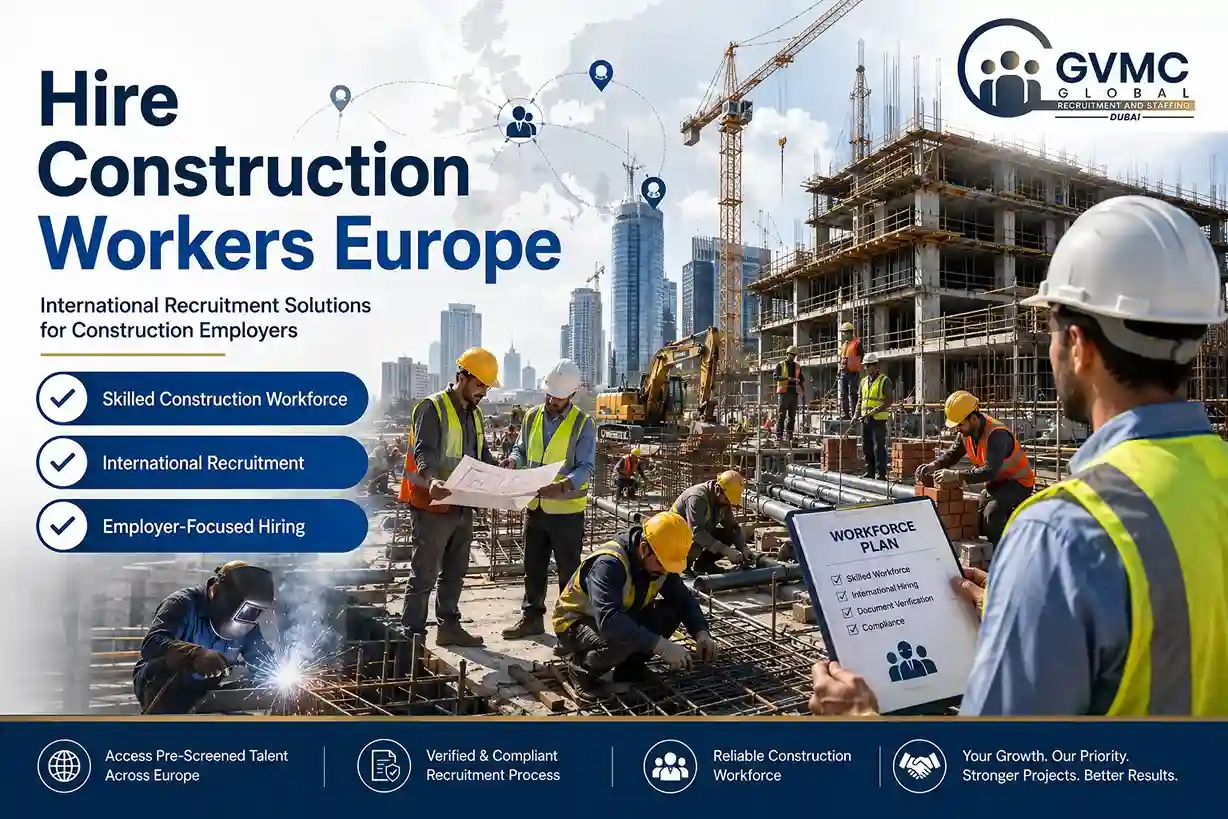
The European construction industry is expanding rapidly, driven by infrastructure projects, commercial developments, renewable energy investments, and housing demand. While this growth presents significant opportunities for businesses, it has also intensified the challenge of finding qualified workers. Across many European countries, contractors, developers, and construction companies are struggling to recruit skilled tradespeople, making it more important than ever to adopt an effective recruitment strategy.
If you’re planning to hire construction workers in Europe, understanding the recruitment process is essential. From identifying workforce requirements to navigating legal compliance and sourcing international talent, every step plays a crucial role in building a reliable workforce. Companies that plan their recruitment early and partner with experienced specialists are better positioned to avoid delays, control labour costs, and complete projects on time.
This employer’s guide explains how to recruit skilled construction professionals, explores the causes of the Construction labour shortage Europe, outlines legal considerations, and provides practical advice to help businesses make informed hiring decisions.
💡 Did You Know?
According to industry reports, construction is one of the sectors most affected by skilled labour shortages across Europe. Many employers are increasingly turning to international recruitment to fill critical roles and keep projects on schedule.
Why Is Europe Facing a Construction Labour Shortage?
The Construction labour shortage Europe has become one of the industry’s biggest challenges. Several factors have contributed to this shortage, affecting projects of every size-from residential housing developments to major infrastructure works.
One of the primary reasons is an ageing workforce. Many experienced construction professionals are reaching retirement age, while fewer young workers are entering skilled trades. At the same time, governments across Europe continue investing heavily in roads, railways, airports, renewable energy, industrial facilities, and commercial developments, creating demand that exceeds the available workforce.
In addition, increased competition between employers means skilled workers are often recruited quickly, making it difficult for companies to fill vacancies through local hiring alone. As a result, many businesses now Hire foreign construction workers to maintain productivity and meet project deadlines.
Benefits of Hiring Construction Workers Internationally
International recruitment has become a practical workforce solution for construction businesses. Instead of relying solely on local labour markets, employers can access experienced professionals from a wider talent pool.
Some of the key benefits include:
- Access to qualified and experienced tradespeople
- Faster recruitment for urgent projects
- Greater workforce flexibility during peak demand
- Reduced project delays caused by labour shortages
- Improved productivity and operational efficiency
- Access to specialised skills that may be difficult to source locally
For employers planning to hire construction workers in Europe, international recruitment provides a competitive advantage by helping secure skilled professionals before labour shortages impact project delivery.
💡 Did You Know?
Hiring skilled international construction workers can help businesses reduce project delays, improve workforce flexibility, and access specialised trade expertise that may not be readily available in local labour markets.
Which Construction Workers Are Most in Demand?
Demand varies by country, but the following occupations are consistently sought after across Europe:
| Construction Trade | Demand Level |
| Bricklayers | Very High |
| Carpenters | Very High |
| Steel Fixers | Very High |
| Electricians | Extremely High |
| Welders | Extremely High |
| Plumbers | Very High |
| Scaffolders | High |
| Concrete Workers | High |
| Heavy Equipment Operators | Very High |
| General Construction Labourers | High |
| Site Supervisors | Very High |
Recruiting these professionals early is often essential, particularly for large-scale infrastructure and commercial construction projects.
Step-by-Step Guide to Hire Construction Workers in Europe
A structured recruitment process helps employers reduce hiring risks while ensuring compliance with local labour regulations.
Step 1: Assess Your Workforce Requirements
Before starting recruitment, clearly define your workforce needs.
Consider:
- Number of workers required
- Trade specialisations
- Experience level
- Project duration
- Work location
- Expected start date
- Required certifications
- Language requirements
Clear planning allows recruiters to identify suitable candidates more efficiently while avoiding unnecessary recruitment costs.
Step 2: Choose the Right Recruitment Method
There are several ways to hire construction workers in Europe, and the right approach depends on your business size, project timeline, and internal recruitment capabilities.
Direct Recruitment
Some employers recruit using internal HR teams and online job platforms. While suitable for occasional hiring, this approach often requires significant time for sourcing, interviewing, and verifying candidates.
Construction Recruitment Agencies
Many employers choose professional Construction recruitment Europe services because specialist recruiters understand the industry’s technical requirements and maintain access to pre-screened candidates. Agencies also help reduce recruitment timelines and administrative work.
International Recruitment
For businesses facing labour shortages, international recruitment offers access to a broader pool of experienced professionals. Many organisations Hire foreign construction workers to fill specialist and high-demand roles that cannot easily be sourced locally.
Step 3: Screen and Evaluate Candidates
Recruitment should focus on quality as well as availability. Before making an offer, employers should assess each candidate’s:
- Trade qualifications
- Practical construction experience
- Safety awareness
- Employment history
- Technical skills
- References
- Physical fitness (where applicable)
This process ensures employers recruit genuinely Skilled construction workers for hire who can contribute effectively from the first day on site.
Step 4: Verify Qualifications and Documentation
Candidate verification is a critical stage of recruitment. Employers should confirm:
- Identity documents
- Passports
- Professional licences
- Trade certificates
- Previous employment
- Reference checks
Thorough verification reduces hiring risks and ensures workers meet project and regulatory requirements.
How to Hire Construction Workers from Outside the EU
Many employers ask How to hire construction workers from outside the EU when local recruitment cannot meet workforce demand. Although immigration procedures vary by country, the overall recruitment process generally follows the same structure.
Employers begin by identifying labour requirements and selecting suitable candidates through international recruitment channels. Once candidates are chosen, an employment contract is issued, followed by the relevant work permit and visa applications. After approvals are granted, workers can travel, complete onboarding, and begin employment.
Working with an experienced Construction staffing agency Europe can simplify this process by coordinating documentation, candidate communication, and compliance requirements.
Common Recruitment Challenges
Construction employers frequently encounter several recruitment challenges, including:
- Limited availability of skilled workers
- Long recruitment timelines
- Increasing labour costs
- Competition for experienced tradespeople
- Visa and documentation delays
- Compliance with employment regulations
Businesses that adopt a proactive recruitment strategy and partner with experienced recruitment specialists are better equipped to overcome these challenges while maintaining project schedules.
Recruitment is only one part of the process. Once suitable candidates have been identified, employers must also understand immigration requirements, hiring costs, legal responsibilities, and how to choose the right recruitment partner
💡 Did You Know?
Visa and work permit requirements vary across European countries. Planning recruitment well in advance helps employers avoid administrative delays and ensures workers can start projects on time.
Also Read – International Recruitment Agency for Employers in Europe: Complete Guide 2026
Construction Worker Visa and Work Permit Requirements in Europe
After selecting the right candidates, employers must ensure they are legally authorised to work in the destination country. Understanding Construction worker visa and work permit requirements Europe is essential because every European country has its own immigration rules, labour regulations, and employer obligations.
In most cases, the recruitment process includes:
- Issuing a formal employment offer.
- Preparing a compliant employment contract.
- Applying for the required work permit or employer sponsorship (if applicable).
- Supporting the candidate with visa documentation.
- Completing immigration approvals.
- Arranging travel and onboarding.
Because immigration policies can change, employers should always verify the latest requirements in the destination country or work with a trusted recruitment partner that stays up to date with regulatory changes.
Employer Responsibilities After Hiring
Recruiting skilled workers is only the beginning. Employers also have a responsibility to provide a safe, compliant, and professional working environment.
Key responsibilities include:
- Providing legally compliant employment contracts
- Paying wages according to national labour laws
- Ensuring safe working conditions
- Supplying Personal Protective Equipment (PPE)
- Conducting site induction and safety training
- Maintaining payroll and tax compliance
- Keeping accurate employment records
- Supporting permit renewals where required
Meeting these obligations not only protects your business but also helps improve employee retention and productivity.
Best Countries to Recruit Construction Workers in Europe
Choosing the right recruitment market can significantly improve hiring outcomes. The Best countries to recruit construction workers in Europe depend on the skills required, project type, language expectations, and local labour availability.
Some of the most popular recruitment markets include:
🇫🇮 Finland
Known for its high construction standards, Finland offers experienced professionals skilled in residential, commercial, industrial, and infrastructure projects, with a strong focus on quality and workplace safety.
🇮🇹 Italy
Italy has a well-established construction workforce with expertise in masonry, concrete work, carpentry, restoration, and large-scale commercial developments.
🇲🇹 Malta
Malta provides qualified construction workers experienced in residential buildings, hospitality projects, infrastructure development, and finishing trades.
🇱🇻 Latvia
Latvia is recognised for skilled tradespeople with experience in carpentry, steel fixing, concrete work, and general construction projects across Europe.
🇱🇹 Lithuania
Lithuania offers experienced construction professionals specialising in civil engineering, structural work, industrial construction, and commercial developments.
🇬🇧 United Kingdom (UK)
The UK has a diverse construction workforce with expertise across infrastructure, residential housing, commercial buildings, utilities, and specialist engineering projects.
🇮🇱 Israel
Israel is home to skilled construction professionals experienced in modern building techniques, commercial construction, infrastructure projects, and finishing works.
🇷🇺 Russia
Russia provides experienced construction workers with expertise in heavy construction, industrial facilities, steel structures, road construction, and large infrastructure developments.
🇧🇾 Belarus
Belarus has qualified tradespeople experienced in masonry, concrete construction, welding, carpentry, and large-scale residential and industrial projects.
🇲🇪 Montenegro
Montenegro offers skilled professionals for residential developments, tourism infrastructure, commercial buildings, and finishing trades.
🇲🇩 Moldova
Moldova is an emerging source of experienced construction workers with expertise in masonry, carpentry, plastering, concrete work, and general labour.
🇧🇦 Bosnia and Herzegovina
Bosnia and Herzegovina has a strong workforce experienced in civil construction, roofing, carpentry, steel fixing, and infrastructure projects, making it an excellent recruitment market for European employers.
Many employers also Hire foreign construction workers from carefully selected non-EU countries where regulations permit, giving access to a wider talent pool and helping overcome workforce shortages.
Where to Find Skilled Construction Labour in Europe for Employers
A common question businesses ask is Where to find skilled construction labour in Europe for employers. The answer depends on recruitment timelines, workforce size, and project requirements.
Reliable recruitment channels include:
- Specialist construction recruitment agencies
- International staffing companies
- Industry associations
- Employee referral programmes
- Professional trade networks
Among these options, experienced agencies offering Construction recruitment Europe services are often the most efficient because they maintain pre-screened candidate databases and manage much of the recruitment process on behalf of employers.
Also Read – Grey Collar Jobs in Europe: What Every EU Employer Must Know in 2026
Cost of Hiring International Construction Workers in Europe
Understanding the Cost of hiring international construction workers in Europe helps employers budget effectively and avoid unexpected expenses.
Typical costs may include:
| Cost Category | Examples |
| Recruitment | Candidate sourcing and screening |
| Immigration | Visa and work permit fees |
| Travel | Flights and transportation |
| Accommodation | Temporary housing where required |
| Documentation | Compliance and administrative costs |
| Onboarding | Site induction and training |
| PPE | Safety equipment and uniforms |
Although international recruitment involves initial investment, many employers recover these costs through reduced project delays, improved productivity, and better workforce availability.
Why Work with a Construction Staffing Agency?
Managing international recruitment internally can be time-consuming and complex. Partnering with a professional Construction staffing agency Europe helps simplify the process while reducing recruitment risks.
Some of the key advantages include:
- Faster access to qualified workers
- Thorough candidate screening
- Reduced administrative workload
- Assistance with documentation and compliance
- Access to international talent pools
- Improved recruitment efficiency
For businesses planning to hire construction workers in Europe, a specialist staffing partner provides valuable expertise and helps ensure projects remain adequately staffed.
Why Choose GVMC Global?
At GVMC Global, we understand the workforce challenges facing today’s construction industry. Our goal is to help employers build dependable teams by providing professional recruitment solutions tailored to construction businesses across Europe.
Our recruitment services include:
- Workforce planning
- International candidate sourcing
- Skill and qualification verification
- Candidate screening
- Documentation assistance
- Recruitment coordination
- Employer support throughout the hiring process
Whether you’re recruiting for residential developments, commercial buildings, industrial facilities, or infrastructure projects, our team works closely with you to identify qualified professionals who match your project requirements.
By helping businesses hire construction workers in Europe efficiently and compliantly, we enable employers to focus on project delivery while we manage the recruitment process.
💡 Did You Know?
While international recruitment involves initial hiring costs, many employers find that filling vacancies quickly helps reduce project delays, overtime expenses, and productivity losses over the long term.
Frequently Asked Questions
1. Can European employers hire foreign construction workers?
Yes. Many businesses Hire foreign construction workers to overcome labour shortages. Employers must comply with the labour and immigration laws of the destination country.
2. How long does international construction recruitment take?
Timelines vary depending on candidate availability and visa processing. Planning recruitment well before project mobilisation helps avoid unnecessary delays.
3. Why is there a construction labour shortage in Europe?
The Construction labour shortage Europe is mainly driven by an ageing workforce, increasing infrastructure investment, and growing demand for skilled trades across multiple European countries.
4. Should I use a recruitment agency or recruit directly?
For occasional hiring, direct recruitment may be suitable. However, employers with ongoing or large-scale workforce requirements often benefit from partnering with a specialist Construction staffing agency Europe that can provide access to qualified candidates more quickly.
5. What qualities should employers look for when recruiting construction workers?
In addition to technical expertise, employers should evaluate safety awareness, reliability, previous project experience, communication skills, and the ability to work effectively within a team.
The demand for across Europe continues to grow, making strategic recruitment more important than ever. Companies that successfully hire construction workers in Europe are those that plan early, understand legal requirements, and adopt a structured recruitment process.
From assessing workforce needs and screening candidates to managing compliance and onboarding, every stage of recruitment contributes to project success. Partnering with experienced professionals also helps reduce hiring risks while improving workforce quality and operational efficiency.
If your organisation is looking to build a reliable construction workforce, GVMC Global is here to help. Our industry-focused recruitment solutions connect employers with qualified professionals, simplify international hiring, and support businesses throughout the recruitment journey.
Contact GVMC Global today to discover how we can help you recruit skilled construction workers for your next project with confidence.